


Most people wear braces about 18 to 24 months, though simple cases can finish faster and complex ones take longer. There is no single answer that fits everyone. Your timeline depends on your teeth, your bite, and your habits. So how long do braces take for you? The only sure way to know is an exam. At Krass Orthodontics in Ellicott City, Dr. David Krass gives you a clear estimate at your free consultation. Here is what shapes the timeline.
This guide breaks the question down step by step. You will learn the typical range and what sits behind it. Then, you will see which factors stretch treatment out or keep it short. You will also learn how to stay on schedule and what happens after your braces come off. Knowledge is power here. The more you understand, the more control you have over your own timeline.
The Typical Braces Timeline
For most patients, braces take around 18 to 24 months. Mild crowding or spacing may wrap up in under a year. More involved bite corrections can run two years or more. These are averages, not promises. Your case is unique. Dr. David maps your expected timeline before you start, so you know what to plan for.
It helps to think in stages. Early on, your teeth do the most visible moving. The middle phase fine-tunes their positions. The final phase perfects your bite so the top and bottom teeth meet correctly. That last stage matters as much as the first. A smile that looks straight but bites wrong is not finished. So a realistic timeline accounts for every stage, not just the obvious movement.
Patients are sometimes surprised that the early progress feels fast. The most crowded teeth often shift within the first few months. Of course, that visible change is exciting and very motivating. But the detail work near the end takes patience. Roots must settle. The bite must lock in correctly. Rushing that final phase risks a result that relapses later. So Dr. David holds the line until your bite is truly right, not just close.
What Affects How Long Do Braces Take?
Several things shape your timeline:
- Case complexity. Bigger movements and bite corrections take more time.
- Your age. Teeth can move a bit faster in growing patients, though adults get great results too.
- Compliance. Wearing elastics as directed keeps you on schedule. Skipping them slows things down.
- Keeping appointments. Regular adjustments move treatment forward. Missed visits add weeks.
- Oral hygiene. Healthy gums and teeth let treatment proceed without delays.
So how long do braces take is partly in your hands. The habits above make a real difference.
Two factors matter most here. Complexity sets the baseline. Closing one small gap is quick. Correcting an overbite while aligning crowded teeth takes far longer. The second big factor is compliance, and that one is yours to control. Elastics, for example, do heavy lifting on bite correction. They only work when you actually wear them. Skip them often, and your finish line moves further away.
Age plays a smaller role than many expect. Teeth can shift a touch faster in a growing teen. But adults achieve excellent, lasting results every day. Healthy gums matter at any age, too. If a gum problem appears, we pause and address it first. So good brushing and flossing are not just about a clean smile. They keep your whole timeline on track.
There is one factor outside anyone's control: biology. Teeth move at the pace the surrounding bone allows. In other words, your body sets that pace, not effort or technology. This is why there is no safe shortcut to rush treatment. Anyone promising dramatically faster results deserves a careful second look. The American Association of Orthodontists recommends care from a specialist for exactly this reason. A trained orthodontist works with your biology, never against it.
How to Stay on Schedule
You have more control than you might think. Wear your elastics exactly as Dr. David advises. Keep every adjustment appointment. Brush and floss well to avoid setbacks. Protect your braces by avoiding very hard or sticky foods. See the best and worst foods with braces for a simple guide. Small, consistent habits keep your treatment on time.
Broken brackets are a hidden timeline thief. Each break may mean an extra visit and lost movement. That is why food rules matter so much. Skip the popcorn, hard candy, and sticky caramels. Cut crunchy foods like apples into small pieces. As a result, these small choices prevent the repairs that quietly stretch treatment out. Protecting your braces is one of the easiest ways to finish on time.
Your appointment rhythm matters just as much. Each adjustment advances your wire and your plan. Miss a visit, and that progress simply waits. Over a long case, a few missed appointments can add up to real weeks. So treat each visit as a scheduled step forward. Consistency, more than anything, keeps how long braces take close to the estimate.
Hygiene quietly protects your timeline too. Brushing and flossing around braces takes a little extra effort. But it is worth it. Plaque buildup can inflame your gums and force a pause in treatment. Healthy gums and teeth let your braces keep working without interruption. So a few extra minutes of care each day pays off in time saved. Good habits and good hygiene are the real accelerators here.
Does Treatment Time Differ by Braces Type?
This is a common question, and the answer is reassuring. In short, the bracket material does not change your timeline. Metal and ceramic braces move teeth at the same pace. Your case and your habits set the schedule, not the bracket. So you can choose based on look and budget, not speed. For a full comparison, see ceramic vs metal braces.
Patients also ask how braces compare to clear aligners on time. The honest answer is that it depends on your case, not the method. Braces work around the clock with no compliance gap, which keeps them steady. Aligners only work while you wear them. We weigh both options in our braces vs Invisalign guide. Dr. David will recommend the approach that fits your smile best.
What Happens After Braces Come Off?
Treatment does not end the day your braces come off. Your teeth need time to settle. A retainer holds them in their new position. Wearing it as directed protects all your hard work. Skipping it is the most common reason teeth shift later. So think of retention as the final, lasting step of treatment.
Here is why retention matters so much. When braces come off, the bone around your teeth is still firming up. Without support, teeth can drift back toward their old spots. A retainer prevents that drift while everything settles. You will wear it full-time at first, then usually just at night for the long run. That simple habit protects years of work and keeps your smile straight for life.
The good news is that retention is easy. Besides, a retainer is comfortable and quick to wear. We will fit yours and explain the schedule clearly. Follow it, and your result lasts. This is the same standard of care you get throughout treatment at our family-owned practice. Dr. David guides every step, from your first visit to your last retainer check. Because you see the same doctor each time, small adjustments happen early, before they can ever turn into delays.
Dr. David's take: “The honest answer to 'how long?' is: as long as your specific bite needs. Igive you a realistic timeline up front rather than a hopeful one. The biggest accelerator is in your hands — keeping your appointments, wearing your elastics or aligners as prescribed and protecting your appliances.”
— Dr. David Krass, board-certified orthodontist, Krass Orthodontics
Frequently Asked Questions
How long do braces take on average?
Most cases run about 18 to 24 months. Mild cases can finish in under a year, and complex cases may take longer. An exam gives you an accurate estimate for your smile.
Can I speed up my braces treatment?
You can avoid delays by wearing elastics as directed, keeping appointments, and caring for your teeth. There is no safe way to rush the biology, but good habits keep you on schedule.
Do braces work faster than Invisalign?
It depends on your case, not the method. Braces work around the clock, so there is no compliance risk. See our braces vs Invisalign guide.
Will I wear a retainer forever?
You will wear one full-time at first, then usually just at night long-term. Retainers protect your result for life and prevent teeth from shifting back.
Does the type of braces change the timeline?
No. Metal and ceramic braces move teeth at the same pace. Your case and your habits set the schedule, so you can choose based on look and budget.
Want a timeline for your smile? Book a free consultation with Dr. David at our Ellicott City office, or call (410) 465-5945. You will leave knowing your options and your expected treatment time.
Keep reading
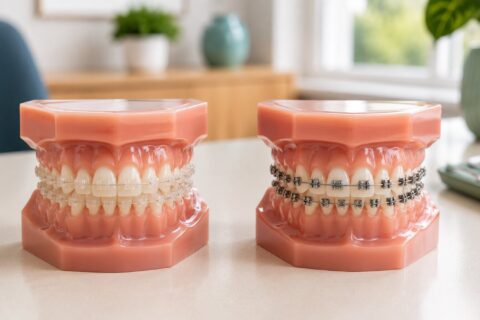
Ceramic vs. Metal Braces: How to Choose
Ceramic vs metal braces: how they compare on appearance, cost, durability and treatment time, and the questions to ask when choosing the…
How Much Do Braces Cost in Ellicott City?
Braces cost depends on your case and the type of braces. See typical price ranges, what affects the total, and how insurance…
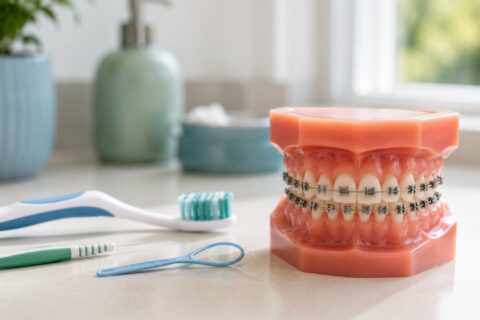
How to Brush & Floss With Braces
Brushing and flossing with braces takes a few new tools and habits. A step-by-step routine for cleaning around brackets and wires to…