


Your first week with braces brings some mild soreness, but it fades fast and is easy to manage. Getting braces on is comfortable. The adjustment that follows is the part most people wonder about. The good news is simple. Within about a week, your braces feel completely normal. At Krass Orthodontics in Ellicott City, Dr. David Krass makes sure you know exactly what to expect. Here is your first week with braces, day by day.
This guide walks you through every part of those first seven days. You will learn what the appointment is like, how the soreness changes day by day, and the simple steps that ease it. You will also learn what to eat, how talking feels, and when a quick call to our office makes sense. Know what is coming, and the adjustment feels far easier.
What Getting Braces On Is Like
The appointment itself is comfortable. There are no shots and no drilling. Dr. David bonds each bracket to your tooth and connects the wire. You may feel pressure, but not pain. The visit usually takes about an hour. You walk out with your new braces and a care kit. Then the gentle work of moving your teeth begins.
Here is what happens in the chair, step by step. First, the team cleans and dries your teeth so the brackets will stick. Next, Dr. David places each bracket in its exact spot and sets the bonding. Then he places the archwire and secures it to the brackets. This is when you get to pick colors of the bands that secure the wire so you can customize your look. The whole process is hands-on and precise, but you should not feel any pain. Most patients are surprised by how easy the visit is.
You will leave with a care kit and clear instructions. The kit usually includes orthodontic wax and tips for the first few days. The pressure you feel right after is your teeth registering the new wire. That sensation is the start of treatment working. It is mild, and it builds slowly over the first day rather than hitting all at once.
Your First Week With Braces, Day by Day
Here is how the first week with braces usually goes:
- Days 1–2. Your teeth feel tender as they start to move. This is the peak of the soreness, and it is mild.
- Days 3–4. The tenderness eases. Your lips and cheeks may feel the brackets, so use wax on any rough spots.
- Days 5–7. Most patients feel back to normal. Eating and talking feel natural again.
Knowing this curve ahead of time helps a lot. The soreness peaks early and then steadily fades, so the hardest part is behind you fast. Days one and two are when soft foods and a salt-water rinse matter most. By the middle of the week, you will likely forget about your teeth and notice your cheeks instead, as they get used to the brackets. By the end of the week, the whole thing feels routine.
Everyone adjusts a little differently. Some patients barely notice those first few days, while others feel more tenderness for a day or two longer. Both are normal. What matters is the direction. As long as the discomfort is fading rather than building, your mouth is adjusting just as it should.
Easing the Soreness
A few simple steps help a lot. Take an over-the-counter pain reliever if you need it. Rinse with warm salt water a few times a day to soothe sore gums and cheeks. Apply orthodontic wax to any bracket that causes discomfort to your cheeks or lips. Cold water and cool foods feel good, too. The discomfort is short-lived, and these steps make it easy.
The salt water rinse is a great remedy that you probably already have at home. Stir about half a teaspoon of salt into a cup of warm water. Swish it around your mouth for thirty seconds, then spit it out. Do this a few times a day, especially after meals. It eases sore gums and helps any spots where a bracket has rubbed the inside of your cheek. It is simple, gentle, and you can do it as often as you like.
Orthodontic wax is an essential tool in your toolkit. New brackets can feel sharp against your lips and cheeks until the tissue toughens up. Dry the bracket, pinch off a small piece of wax, and press it over the bracket gently. It creates a smooth surface so the bracket no longer rubs. The wax may fall off when you eat, and that is fine. Just dry the area and reapply. Within a few days, your mouth adjusts and you will need it less.
What to Eat the First Few Days
Stick to soft foods while your teeth are tender. Soups, smoothies, yogurt, eggs, and pasta are perfect. Avoid hard, sticky, and chewy foods for now. They are uncomfortable and can damage new braces. For a full list, see the best and worst foods with braces. Within a few days, you can ease back to your normal braces-friendly diet.
Cool and soft is the winning combination for the first couple of days. A smoothie, a bowl of yogurt, or a cup of cold applesauce feels soothing on tender teeth. Lukewarm soup, scrambled eggs, mashed potatoes, and oatmeal are easy too. Think of anything you can eat without much chewing. That is your menu while your teeth settle into the new wire.
Skip the hard and chewy foods entirely this week. Crunchy snacks and tough breads are uncomfortable on sore teeth, and they put new brackets at risk before the bonding has fully settled into your routine. There is no need to test your limits in the first few days. Stick to soft foods, let the tenderness pass, and then bring back more variety from your normal braces-friendly diet.
Talking and Daily Life
You may notice a slight lisp at first. It goes away quickly as your mouth adjusts. Reading aloud for a few minutes speeds it up. Keep up your hygiene from day one, since clean teeth heal and feel better. See how to brush and floss with braces for the routine. By the end of the first week with braces, daily life feels normal again.
The lisp catches people off guard, but it is harmless and temporary. Your tongue is simply learning to work around the new brackets. The fastest fix is to talk more, not less. Read aloud, chat with family, or practice the sounds that feel tricky. Within a few days, your speech sounds completely normal again, and you stop thinking about it.
Start your hygiene routine the very first night. Clean teeth and healthy gums feel better and adjust faster than neglected ones. Brushing around new brackets takes a little practice, so go slow and gentle while your teeth are tender. A soft brush and a careful pass around each bracket is all you need at first. Building the habit now makes the rest of treatment far easier.
When to Call Us
Mild soreness is expected. Some things are worth a quick call, though. Reach out if a bracket comes loose or a wire pokes you. Wax can hold you over until we see you. We’re always here to help keep you comfortable. If something doesn’t feel right or you’re unsure what to do, please reach out to us.
It helps to know the difference between normal and not. Dull, achy tenderness across your teeth is expected, and it fades on its own. A sharp poke from a wire, a bracket that has shifted or come loose, or a sore that will not heal is different. Those are easy fixes, but they need our attention. A quick call lets us tell you whether to come in or simply use wax until your next visit.
You are never bothering us by checking in. We would much rather hear from you early than have you sit through a week of avoidable discomfort. So if something feels off and you are not sure, call our office. We will help you stay comfortable and keep your treatment moving the way Dr. David planned it.
Dr. David's take: “That first week feels like a lot, and then it doesn't. Some tenderness is normal — it means your teeth are responding. Soft foods, a little wax on any rough spot, and some patience, and within days your mouth adjusts. By week two, most patients forget the braces are even there.”
— Dr. David Krass, board-certified orthodontist, Krass Orthodontics
Frequently Asked Questions
Do braces hurt the first week?
You may feel mild soreness for a day or two, especially on days one and two. It fades quickly and is easy to manage with salt-water rinses and wax.
What should I eat the first week with braces?
Soft foods like soup, yogurt, smoothies, eggs, and pasta. Avoid hard, sticky, and chewy foods until the tenderness passes.
How do I stop brackets from rubbing?
Apply orthodontic wax to any bracket that irritates your cheek or lip. It creates a smooth surface while your mouth adjusts.
How long until braces feel normal?
Most patients feel completely used to their braces within about a week. After that, you will barely notice them.
Will my speech sound different?
You may notice a slight lisp for a few days as your tongue adjusts to the brackets. Reading aloud speeds up the adjustment, and your speech returns to normal quickly.
Ready to get started? Book a free consultation with Dr. David at our Ellicott City office, or call (410) 465-5945. We will make your first week with braces smooth and comfortable.
Keep reading
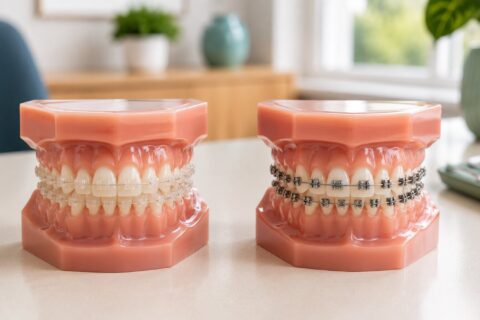
Ceramic vs. Metal Braces: How to Choose
Ceramic vs metal braces: how they compare on appearance, cost, durability and treatment time, and the questions to ask when choosing the…

How Much Do Braces Cost in Ellicott City?
Braces cost depends on your case and the type of braces. See typical price ranges, what affects the total, and how insurance…

How Long Do Braces Take?
How long do braces take? See typical treatment times for kids, teens and adults, what can speed treatment up or slow it…