

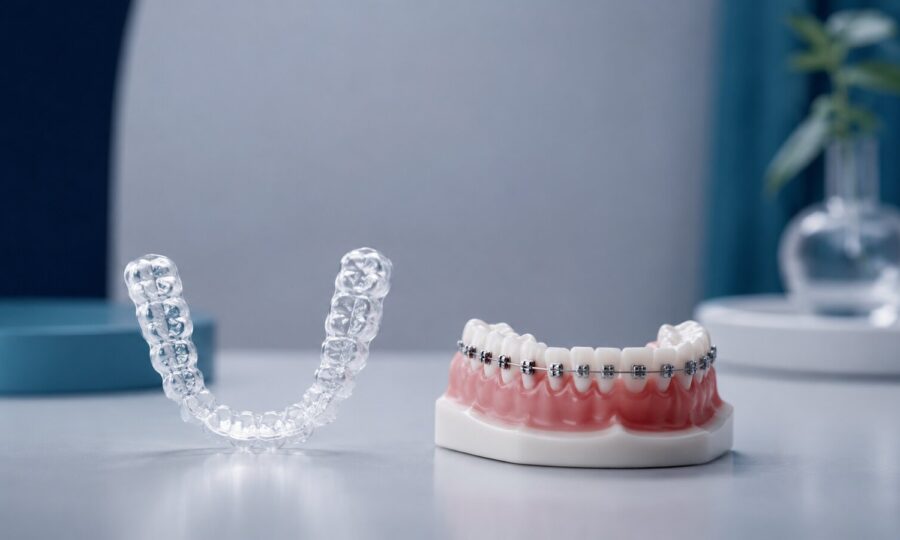
Neither braces nor Invisalign is universally better — the right choice depends on your case, your lifestyle, and your goals. Both straighten teeth well. Both are offered at Krass Orthodontics in Ellicott City. Braces handle the widest range of corrections and need no daily discipline. Invisalign wins on discretion and convenience for milder cases. This braces vs Invisalign guide compares the two on the things that matter most. Dr. David Krass will help you decide at your free consultation.
There is a lot of noise online about which method is best. Most of it skips the part that actually matters: your specific teeth. So this guide stays practical. We will walk through appearance, comfort, treatment time, cost, case complexity, and daily habits. By the end, you will know which questions to ask and which factors should drive your decision. The goal is an honest, useful comparison — not a sales pitch for one option over the other.
Braces vs. Invisalign at a Glance
Before we dig into the details, here is a quick side-by-side on the points patients ask about most:
- Appearance. Braces are visible, though optional ceramic blends in. Invisalign is nearly invisible.
- Removable. Braces are fixed in place. Invisalign comes out for eating and brushing.
- Daily discipline. Braces need none. Invisalign must be worn 20 to 22 hours a day.
- Best for. Braces handle all cases, including complex ones. Invisalign suits mild-to-moderate cases.
- Food limits. With braces, avoid hard and sticky foods. With Invisalign, the trays come out during eating, so there are none.
- Cost. The two usually land in a similar range.
That snapshot is a starting point, not the whole story. Each factor deserves a closer look, because the right answer changes from person to person. Let us take them one at a time.
Appearance
This is the biggest difference for many people. Invisalign aligners are clear. Most people will not notice you are wearing them. Braces are visible, though ceramic (clear) braces blend in more than metal. If discretion is your top priority, Invisalign has the edge. If you do not mind the look, braces are a great choice too. In fact, you can customize the color of your braces to show off your personal style.
Appearance matters more in some lives than others. A professional who presents in meetings all day may value the near-invisible option. A teen who plays a wind instrument or a contact sport may have different priorities. There is no wrong answer here. It is simply one factor among several. Dr. David walks through it with you so the look fits your daily life, not just the first photo.
Comfort
Both feel snug at first. With braces, brackets and wires can rub your cheeks until you adjust. A little wax helps. With Invisalign, there are no sharp edges. You may feel mild pressure with each new tray. That fades in a day or two. Most patients find both very manageable.
It helps to know that mild pressure is the point. Orthodontic movement works by applying gentle, steady force to your teeth. The American Association of Orthodontists describes this as a normal, expected part of treatment. So a tender day or two after an adjustment or a new aligner is a good sign. It means your teeth are moving as planned. The discomfort is temporary, and it eases as your treatment settles into a rhythm.
Treatment Time
Treatment time is one of the first questions patients ask. It depends mostly on your case, not the method. Mild cases finish faster either way. With Invisalign, wear time matters a lot. If you do not wear the trays enough, treatment slows down. Braces work around the clock, so there is less compliance risk. For a typical timeline, see how long braces take.
Here is the practical version. Braces remove the variable of your own discipline. They are always on the job. Invisalign can finish just as quickly, but only if you keep the trays in. That is why we are honest about wear time up front. If you know you will wear your aligners faithfully, the timelines are comparable. If you are unsure, braces protect your schedule for you. To understand why consistent force matters so much, read how Invisalign works.
Cost
Many people assume Invisalign costs much more. In practice, the two usually land in a similar range. So let your case guide the choice, not price alone. The same insurance, payment plans, and FSA or HSA options apply to both. For details, see Invisalign cost, braces cost, and our payment and insurance guide.
Cost is real, and we understand it is an important consideration. We simply do not want it to push you toward the wrong tool. A slightly cheaper option that does not fit your case is not a bargain. The smarter move is to pick the method that treats your teeth predictably, then build a payment plan around it. We help with that part. Most families find the monthly numbers more comfortable than they expected once insurance and flexible spending dollars are applied.
Case Complexity and Effectiveness
Braces can correct almost anything. They handle complex bites, large rotations, and severe crowding with ease. Invisalign treats a wide range too, and the technology keeps improving. But very complex cases may straighten more predictably with braces. Dr. David will tell you honestly which option fits your case best. That candid advice is part of every consultation.
The reason comes down to control. Braces grip each tooth with a bracket and wire, which gives the orthodontist precise command over difficult movements. Invisalign relies on the shape of each tray and, where needed, small bonded attachments to grip and turn certain teeth. Those attachments expand what aligners can do. Still, a tooth that needs a large rotation or a major root movement is sometimes easier to control with braces. This is exactly the kind of judgment a board-certified orthodontist is trained to make. The plastic does not decide. The doctor does.
Lifestyle and Discipline
Think about your daily habits. Invisalign is removable, which is freeing. You eat what you want and brush normally. But you must put the trays back in and wear them 20 to 22 hours a day. That takes discipline. Braces remove the guesswork. They are always working, with nothing to remember. Teens and busy adults sometimes do better with the simplicity of braces.
Be honest with yourself here, because this factor decides more cases than people expect. If you travel often, eat on an unpredictable schedule, or know you will misplace small things, braces may serve you better. If you are organized and motivated by the freedom to remove your trays, Invisalign rewards that. There is also the eating question. With Invisalign, you take the trays out and eat normally; you can read more in our guide to eating and drinking with Invisalign. With braces, you adjust your menu instead. Neither is a dealbreaker — they are just different trade-offs.
So, Which Is Right for You?
Here is the simple version. Choose Invisalign if discretion and flexibility matter most and your case is mild to moderate. Choose braces if you want maximum versatility, no daily discipline, or you have a complex case. For many patients, either option would work well. The best way to decide is a quick, free consultation. Dr. David reviews your teeth, your goals, and your routine, then gives a clear recommendation.
What sets that recommendation apart is the person behind it. Dr. David is a Harvard-trained and board-certified orthodontics specialist. He also runs a family-owned practice, which means more doctor time, real continuity, and meaningful connection. The specialist who plans your treatment is the same one who guides it, visit after visit. So you are not choosing between braces and Invisalign in a vacuum. You are choosing with an expert who has done both, many times, and who will tell you the truth about which one fits your smile. To explore the aligner option further, start with our Invisalign overview or learn more about traditional braces.
Dr. David's take: “I never start with 'braces or Invisalign?' I start with your bite, your goals, and your daily life. The right tool is the one that fixes your case predictably and that you'll actually wear. Sometimes that's clear aligners; sometimes braces simply do it better — and my job is to tell you the truth either way.”
— Dr. David Krass, board-certified orthodontist, Krass Orthodontics
Frequently Asked Questions
Is Invisalign more expensive than braces?
Usually the two fall in a similar range. The better question is which option fits your case and lifestyle. The same payment options apply to both.
Which works faster, braces or Invisalign?
It depends on your case, not the method. With Invisalign, consistent wear keeps you on schedule. Braces work around the clock, so there is less compliance risk.
Can Invisalign fix the same problems as braces?
Invisalign treats a wide range of cases. Very complex corrections may do better with braces. Dr. David will advise you honestly after a quick exam.
Which is better for adults?
Both work well for adults. Many adults prefer Invisalign for discretion. Others choose braces for simplicity. It comes down to your case and your preference.
Can I switch from braces to Invisalign, or the other way around?
Sometimes, yes. A plan can adapt if your needs change. Dr. David will walk you through whether a switch makes sense for your case and goals.
Still not sure which is right for you? Book a free consultation with Dr. David at our Ellicott City office, or call (410) 465-5945. You will get an honest recommendation and a clear plan.
Keep reading
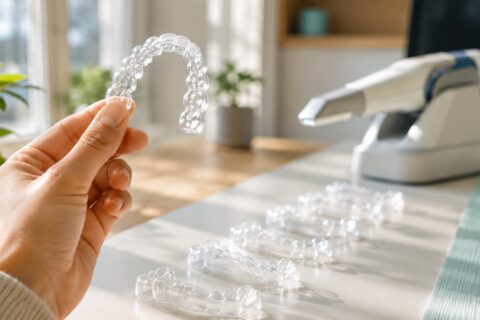
How Invisalign Works: A Step-by-Step Guide
How Invisalign works, from your first 3D scan to your last aligner: what happens at each step, how often you switch trays…

How Much Does Invisalign Cost in Ellicott City?
Invisalign cost in Ellicott City depends on your case. Learn what drives the price, how insurance and FSA/HSA dollars help, and how…
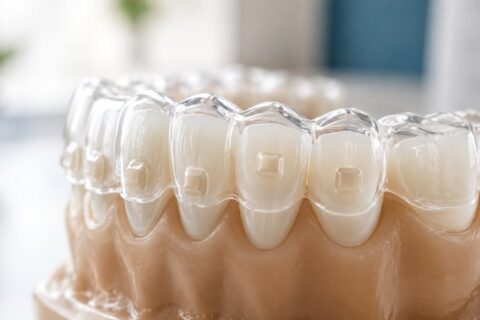
What Are Invisalign Attachments?
Invisalign attachments are small tooth-colored bumps that help aligners grip and move teeth. Learn what they do, whether they hurt and how…