


Braces cost depends on your case, but most patients pay far less than the sticker number suggests. Insurance, FSA and HSA dollars, and payment plans all bring the price down. Simpler cases cost less. Complex cases cost more. At Krass Orthodontics in Ellicott City, Dr. David Krass gives you a clear, itemized quote at a free consultation. No guesswork, no surprises.
This guide explains how braces pricing really works. You will learn what drives the number up or down. You will see how insurance, FSA, and HSA dollars help. You will also learn how monthly payment plans make treatment manageable. The goal is simple. By the end, you will understand your braces cost well enough to plan with confidence.
How Much Do Braces Cost?
Think of braces cost as a range, not one fixed number. Every smile is different. Shorter cases cost less. More complex and longer cases cost more. Where you are treated matters too. So does the orthodontist's experience. The only sure way to learn what your braces cost is a quick exam. That visit is always free here. Your quote then reflects your teeth, not someone else's.
Why is there a price range? Because no two mouths are alike. One patient may need minor spacing closed in under a year. Another may need a full bite correction over two years. Those are very different amounts of work. So a single advertised price rarely tells the whole story. A real number comes only after a doctor sees your teeth. That is exactly what your free consultation provides.
Your free consultation is where the abstract range becomes your real number. Dr. David examines your teeth, your bite, and your goals. He maps the work your case actually needs. Then you receive an itemized quote in writing. There is no pressure to start that day. You can take the figure home and plan around it. That clarity is the whole point of a no-cost exam.
What's Included in Your Fee?
A price only means something when you know what it covers. At Krass Orthodontics, your fee is all-inclusive. It covers your records and exam. It covers placing and adjusting your braces. It covers your visits with Dr. David. And it covers your first retainers. So compare offices carefully. A low headline price with extra charges can add up fast. Always ask what is bundled in.
This matters more than most people realize. Some quotes look low until you read the fine print. Then come separate charges for X-rays, retainers, or broken-bracket repairs. Those add-ons can quietly inflate the final bill. We avoid that. Your braces cost here is one clear number for your whole treatment. When you compare practices, ask each one what their fee leaves out.
What Affects the Price of Braces?
A few clear things explain the range:
- Case complexity. Minor crowding costs less to fix than a major bite problem.
- Treatment length. More months and more visits raise the fee.
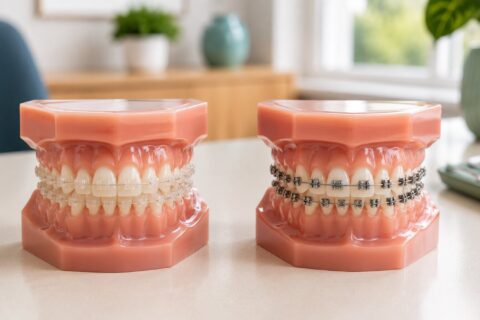
- Bracket type. Ceramic braces usually cost a little more than metal. See ceramic vs metal braces.
Because these are personal, be wary of any "one price fits all" promise. A real estimate follows an exam.
Here is a closer look at those factors. Complexity is the biggest driver. Straightening a few crowded teeth is simpler than correcting an overbite and crowding together. More complex work means more appointments and more appliance time. Bracket choice plays a smaller role. Tooth-colored ceramic costs a bit more than metal, but the difference is modest for most cases. None of these change what you ultimately pay out of pocket, though. That is where insurance and payment plans come in.
Does Insurance Cover Braces?
Often, yes. Many dental plans include an orthodontic benefit. Most plans cover a share of treatment, up to a lifetime maximum. That maximum is a set dollar amount per person. Orthodontic maximums do not reset each year like regular dental benefits. We work with most insurance providers. Our team checks your exact benefits before your free consultation, and we handle the paperwork.
Here is the part patients miss most. An orthodontic lifetime maximum is separate from your annual dental benefit. It is a one-time pool of dollars for orthodontic care. Once we know your plan, we can tell you how much it applies. Then we subtract that from your fee right away. So your real cost is far clearer than the national range suggests. We do this math for you before any treatment begins.
One more point about timing. Many orthodontic benefits pay out over the course of treatment, not all at once. That is normal and fine. We coordinate those payments with your plan so the schedule works for everyone. The key takeaway is simple. Your insurance benefit lowers your fee, and we do the legwork to capture every dollar of it.
Payment Plans, FSA, and HSA
Insurance rarely covers the whole fee. The rest is easy to manage when you spread it out. We offer interest-free, in-house payment plans with no credit check . So your braces cost fits your budget. You can also use pre-tax FSA or HSA dollars. Orthodontics is a qualified medical expense. That lowers your real cost. Most families combine all three: insurance, FSA or HSA, and a monthly plan. Our payment and insurance guide walks through each option.
Think of these tools as three layers that stack. Insurance takes the first cut off the top. FSA or HSA dollars cover part of the rest with pre-tax money. Then a monthly plan spreads what remains across your treatment. Stacked together, they turn a large one-time number into a small monthly one. That is how most families afford braces comfortably. We will build the exact stack with you at your consultation.
Metal vs. Ceramic Cost
Bracket choice has a small effect on price. Metal braces are usually the most affordable option. Ceramic braces cost a little more, because the materials are pricier. The difference is modest for most cases. Both deliver excellent results, and the same payment options apply to either. So your choice can rest on look and budget, not just cost. For a full comparison, see ceramic vs metal braces.
We never want cost alone to drive this choice. If a discreet look matters to you, ceramic may be worth the small premium. If durability and value come first, metal is a great pick. Dr. David will lay out the difference plainly. Then you decide what fits your goals and your budget.
Are Braces Worth the Cost?
For most people, yes. A straight, healthy smile pays off for decades. It supports easier cleaning and long-term oral health. Crowded or misaligned teeth wear unevenly and are harder to clean. Those problems often cost more to fix later. So braces are a health investment, not just a cosmetic one. When you spread the fee over years of benefit, the value is strong.
Consider the long view. Straight teeth are easier to brush and floss. That lowers your risk of decay and gum problems over time. A balanced bite also wears more evenly, which protects your teeth for life. So the cost of braces buys more than a nicer smile. It buys easier daily care and fewer dental problems down the road. For many families, that long-term value is the real return.
The Bottom Line on Braces Cost
Your braces cost depends on your case. And it rarely reflects what you actually pay. Insurance, FSA or HSA funds, and a payment plan all lower the real number. So skip the endless searching. A short, free consultation turns a national range into your exact price, with a clear plan to pay for it.
Dr. David's take: “I believe families deserve a real number, not a 'starting at.' At your consult you'll get the full fee for your case, what your insurance covers, and a monthly plan that works. You’ll know everything before you commit to anything. Good orthodontics shouldn't come with fine print.”
— Dr. David Krass, board-certified orthodontist, Krass Orthodontics
Frequently Asked Questions
How much do braces cost?
It depends on the complexity and length of treatment. The only accurate figure comes from an exam, given free at your consultation. Most patients pay much less out of pocket after insurance and payment plans.
Does insurance cover braces?
Many plans do, through an orthodontic lifetime maximum and a coverage percentage. We verify your exact benefits before treatment and handle the paperwork for you.
Can I pay for braces monthly?
Yes. We offer flexible monthly payment plans for the part insurance does not cover. You can also use pre-tax FSA or HSA dollars to lower your real cost.
Are metal braces cheaper than ceramic?
Usually, yes. Metal is the most budget-friendly option. Ceramic costs a little more. The difference is modest for most cases, and the same payment options apply to both.
Why is a free consultation the best way to learn the price?
Because your braces cost reflects your specific teeth. An exam lets Dr. David give an itemized quote, apply your insurance, and build a monthly plan. You leave knowing your real number.
Want your exact braces cost? Book a free consultation with Dr. David at our Ellicott City office, or call (410) 465-5945. You will leave knowing your price, your insurance benefit, and your monthly payment.
Keep reading
Ceramic vs. Metal Braces: How to Choose
Ceramic vs metal braces: how they compare on appearance, cost, durability and treatment time, and the questions to ask when choosing the…

How Long Do Braces Take?
How long do braces take? See typical treatment times for kids, teens and adults, what can speed treatment up or slow it…
How to Brush & Floss With Braces
Brushing and flossing with braces takes a few new tools and habits. A step-by-step routine for cleaning around brackets and wires to…