

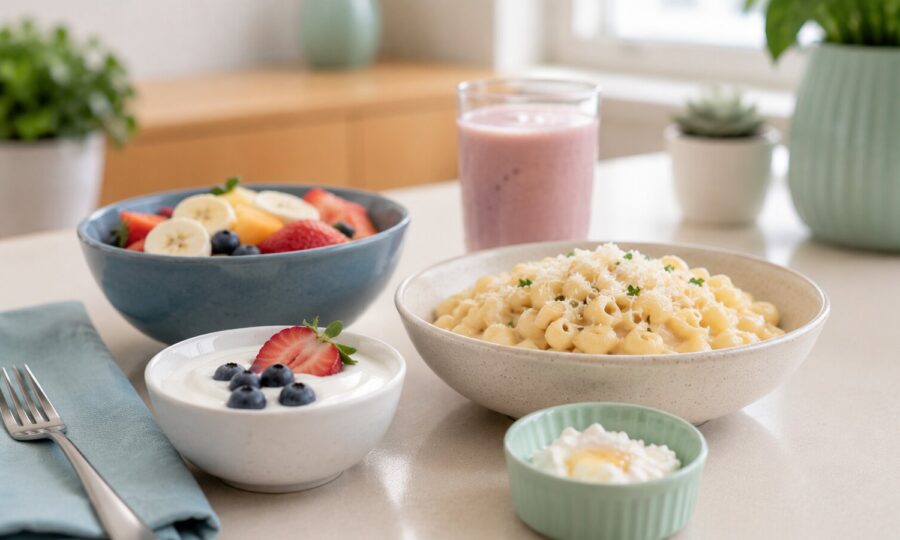
The best foods to eat with braces are soft and easy to chew, while the worst are hard, sticky, or chewy enough to break a bracket. Braces do not change your whole diet. They just call for a few smart choices. A broken bracket means an extra visit and a possible delay. So a little care protects your treatment. At Krass Orthodontics in Ellicott City, Dr. David Krass gives every patient this simple food guide. Here is what to enjoy and what to skip.
This guide covers the whole picture. You will see the best foods to eat with braces, the worst foods to avoid, and easy swaps for the ones you will miss. You will also learn what to eat right after an adjustment and a simple rule of thumb that covers almost any meal. Eat well, protect your brackets, and keep your treatment on schedule.
Best Foods to Eat With Braces
Plenty of foods are easy and safe with braces:
- Dairy. Yogurt, soft cheese, and milk-based foods.
- Soft grains. Pasta, rice, soft bread, and oatmeal.
- Proteins. Eggs, tender chicken, fish, tofu, and beans.
- Soft fruit. Bananas, berries, and applesauce.
- Cooked vegetables. Steamed or roasted until tender.
These foods to eat with braces are filling and gentle on your brackets. They are also great for the first days after each adjustment.
Notice that this is a normal, balanced diet. You are not stuck with bland meals or baby food. You simply lean toward textures that do not strain your brackets. A bowl of pasta, a piece of baked fish, and steamed vegetables is a complete dinner that braces handle with ease. Add yogurt and soft fruit for snacks, and you have plenty of variety.
Nutrition still matters during treatment. Your gums and the bone around your teeth are doing real work as your teeth move. So aim for protein at meals, plenty of calcium from dairy, and fruits and vegetables in soft forms. Cooked or blended versions of crunchy foods give you the same nutrition without the risk. A smoothie packs in fruit that would otherwise be off the menu.
Variety keeps the diet sustainable. Treatment lasts many months, so you want meals you will actually look forward to. Rotate your soft proteins between eggs, fish, beans, and tender meat. Build bowls with rice or pasta as a base, then add cooked vegetables and a protein. Soft tacos on warm tortillas, casseroles, and slow-cooked stews all work beautifully. Once you see how wide the list of foods to eat with braces really is, the few restrictions feel minor.
Foods to Avoid With Braces
A few foods cause most broken brackets. It is best to skip these:
- Hard foods. Nuts, hard candy, ice, and crunchy raw carrots.
- Sticky foods. Caramel, taffy, and gummy candy.
- Chewy foods. Bagels, hard rolls, and tough cuts of meat.
- Crunchy snacks. Popcorn and hard chips, which lodge in brackets.
- Whole hard fruit. Bite into apples and they can snap a bracket.
Each of these breaks brackets in its own way. Hard foods snap a bracket loose the moment you bite down. Sticky foods grab the bracket and pull it off the tooth as you chew. Chewy foods tug and twist your brackets as you eat, which loosens the bonding. Crunchy snacks shatter into sharp bits that wedge under the wire. Once you understand the pattern, the list is easy to remember.
Two snacks deserve a special warning: popcorn and ice. Popcorn hulls slide under the gum and around brackets, where they are almost impossible to clean out and can cause irritation. Ice is hard enough to crack a bracket or even a tooth. Both are among the most common culprits behind an unplanned repair visit. So save the popcorn for a movie after your braces come off, and let your drinks chill without chewing the ice.
Smart Swaps
You do not have to give up your favorites. Just adjust how you eat them. Cut apples and carrots into small pieces. Choose soft tortillas over crunchy chips. Pick seedless bread over hard rolls. Swap hard candy for a milkshake or smoothie. These small swaps keep meals enjoyable and your braces safe.
The trick is to change the texture, not the food. Crave a crunchy apple? Slice it thin and it is perfectly safe. Want corn on the cob? Cut the kernels off the cob first. Love a burger? Cut it into small bites instead of taking big front-tooth bites. Almost any food becomes braces-friendly when you make it softer or smaller before it reaches your mouth.
The same logic works for cooking. Roasting or steaming turns hard raw vegetables into tender, safe foods. Slow-cooking a tough cut of meat makes it fall-apart soft. Blending fruit into a smoothie lets you keep berries with seeds and skins on the menu. A little prep in the kitchen opens up far more of your favorite meals than you might expect.
How you bite matters as much as what you eat. Most broken brackets come from the back teeth, since they are the major chewing teeth. Front teeth are built for tearing, and that tearing motion can also tug a bracket loose. Cut food into small pieces, which will eliminate the need to tear food apart with your front teeth and minimize the chewing stress on your back teeth. This one habit prevents a surprising share of repair visits, and it lets you keep eating foods you might otherwise skip.
The First Few Days After an Adjustment
Your teeth may feel tender right after braces go on or get tightened. Stick to soft foods for a day or two. Soups, smoothies, yogurt, and pasta are perfect. The soreness fades quickly. Then you can return to your normal braces-friendly diet. For more on those early days, see your first week with braces.
The tenderness comes from your teeth starting to move, which is exactly what you want. It is a good sign, even if chewing feels strange for a bit. Keep a few easy meals on hand for those days. Scrambled eggs, oatmeal, mashed potatoes, and soup take the pressure off sore teeth. Cool or room-temperature foods often feel best, since cold can be soothing.
This soft-food window is short. Most patients are back to normal eating within two or three days of an adjustment. If the soreness lingers longer or feels sharp rather than achy, that is worth a call. As a rule, dull tenderness is normal and fades, while a poking wire or a loose bracket is not and should be looked at.
A Quick Rule of Thumb
When in doubt, ask one question. Is it hard, sticky, or chewy? If yes, skip it or cut it small. If no, enjoy it. That simple test covers almost every meal. Follow it and you will avoid most broken brackets.
Keep that one question in your pocket and you will rarely go wrong. It works at a restaurant, at a party, and at the school cafeteria. You do not need to memorize a long list. You just need to pause for a second before you bite into something new. Hard, sticky, or chewy means modify it or pass. Everything else is fair game.
Why a Few Food Choices Protect Your Whole Treatment
Every broken bracket has a cost beyond the repair itself. When a bracket pops off, the tooth it was guiding stops moving until we fix it. So one bad bite can quietly stretch your timeline. A handful of broken brackets over the course of treatment can add weeks. Careful eating is one of the simplest ways you can help your braces finish on time.
Food choices also tie into hygiene. Sticky and sugary foods feed the plaque that collects around brackets. Crunchy crumbs wedge into spots a toothbrush struggles to reach. So skipping the worst offenders protects your enamel as well as your hardware. The two habits work together. Pair smart eating with a solid cleaning routine, and your smile stays healthy from the first appointment to the last. Learn the cleaning side in our guide to brushing and flossing with braces.
Dr. David's take: “Most broken-bracket emergencies I see trace back to one bite of the wrong thing. Skip the hard and sticky — popcorn kernels, ice, taffy — and braces stay on schedule. Everything soft is fair game. A little planning at the table saves you an extra trip to my chair.”
— Dr. David Krass, board-certified orthodontist, Krass Orthodontics
Frequently Asked Questions
What can I eat right after getting braces?
Stick to soft foods for a day or two — yogurt, soup, smoothies, pasta, and eggs. The tenderness fades fast, and then you can return to your normal braces-friendly diet.
Can I chew gum with braces?
It is best to avoid gum, since it sticks to brackets and wires. Ask Dr. David if you have questions about specific snacks.
Can I eat popcorn with braces?
Skip popcorn. The hulls lodge under brackets and the kernels can break them. Save it for after treatment.
Can I drink soda with braces?
The bigger concern with soda is sugar and acid, not the braces themselves. Sugary drinks feed plaque around your brackets, which can lead to white spots. If you do have one, enjoy it with a meal and rinse with water afterward.
What if I break a bracket on a food?
Call our office. A broken bracket is usually an easy fix, but it should be repaired promptly to keep treatment on track.
Starting treatment soon? Book a free consultation with Dr. David at our Ellicott City office, or call (410) 465-5945. We will set you up for a smooth, comfortable experience.
Keep reading
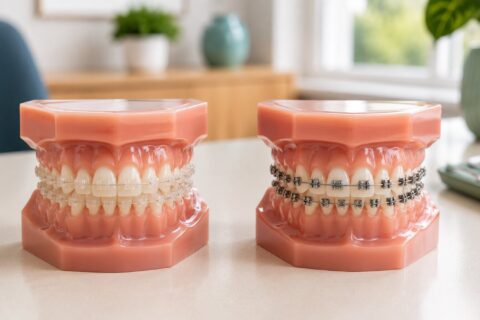
Ceramic vs. Metal Braces: How to Choose
Ceramic vs metal braces: how they compare on appearance, cost, durability and treatment time, and the questions to ask when choosing the…
How Much Do Braces Cost in Ellicott City?
Braces cost depends on your case and the type of braces. See typical price ranges, what affects the total, and how insurance…

How Long Do Braces Take?
How long do braces take? See typical treatment times for kids, teens and adults, what can speed treatment up or slow it…